For radio-controlled vehicles, the battery is a crucial component as it determines performance, both in terms of speed and battery life. Therefore, it’s essential to take good care of your batteries.
Here are some tips to help you maintain optimal battery performance.
A LiPo battery (which uses the same technology as your phone) is composed of chemicals. If the battery were to be damaged, it could be very dangerous. There is a real risk of overheating, fire, or explosion. However, for normal use, there’s no need to worry; there’s no risk.
- Do not puncture a LiPo battery.
- If you notice the battery swelling, stop charging and using it. (Recycle it carefully.)
- Do not leave the battery in direct sunlight or near a heat source.
- If your battery is physically damaged, place it in an area that will limit further damage and prevent the spread of fire in the event of a fire.
- Inspect its condition regularly, especially after a vehicle crash.
- Keep the battery out of reach of children and pets.
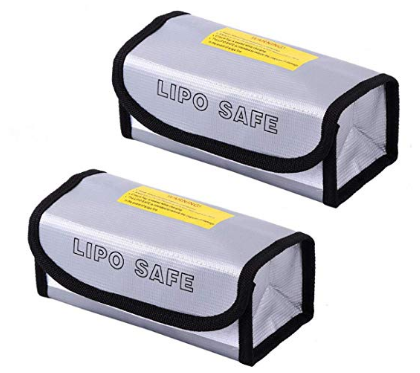
To store your batteries safely, there are small pouches available. These protect them from impacts and in case of chemical reactions or even a small fire. The pouch is fire-resistant for a few seconds. This impressive reaction is short-lived and depends on the battery’s capacity (size).
After these safety warnings, here are a few usage tips.
- After using the battery, let it cool down, then recharge it. Do not allow a LiPo battery to discharge for extended periods.
- It is even recommended to recharge them every 3-4 months if you are not using them for a long time.
- Avoid fully discharging the battery. If it is no longer performing well, do not continue charging; it does not tolerate cycles with low levels.
- Always use a suitable charger and cable for charging.
- Store it at room temperature; avoid both cold and heat.
Having a few cars, drones, and small helicopters, I have several LiPo batteries, so I invested in two small, fireproof protective bags for a few euros. One for the charged LiPos, the other for the discharged ones. This way, they’re protected while I’m out in the field, I avoid risks, and I know which ones need recharging when I get home.
If you buy batteries from major brands, they’re high quality and the risks are lower, but take good care of your batteries.
Here is a video of someone who noticed that their battery was badly damaged. : https://www.youtube.com/watch?v=hg3r2erRrfw
And here’s a simulation in the protective bag : https://youtu.be/atkgUwGHL_k?t=607